
Half Moon Conure
$599.98
| Feature | Details |
| Common Name | Half-moon Conure / Orange-fronted Parakeet |
| Scientific Name | Eupsittula canicularis |
| Average Size | 9 to 10 inches (23 to 25 cm) |
| Lifespan | 20 to 25 years with proper care |
| Temperament | Docile, curious, and affectionate |
| Noise Level | Low to Moderate (One of the quietest Aratinga-type birds) |
The Half-moon Conure (Eupsittula canicularis)
The Gentle Orange-Fronted Beauty
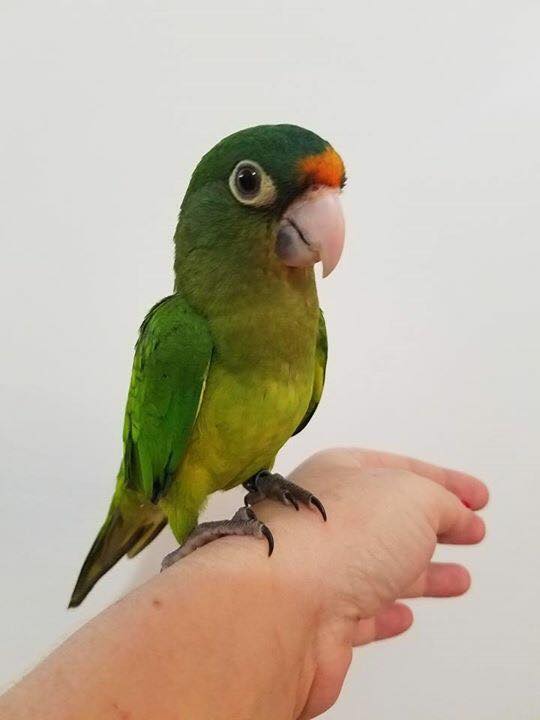
The Half-moon Conure, also known as the Orange-fronted Parakeet, is a small, bright, and charming bird native to the western coast of Mexico and Central America. They are often confused with the Peach-fronted Conure, but they have a distinct look and a personality that is widely considered one of the most “mellow” in the conure family.
While they are members of the Eupsittula genus (similar to the Brown-throat), they are prized for being smaller, quieter, and exceptionally sweet-natured.
Key Characteristics
-
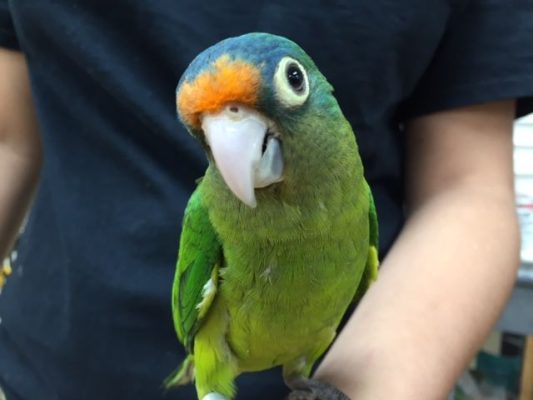
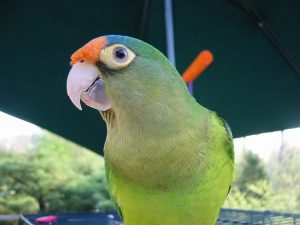
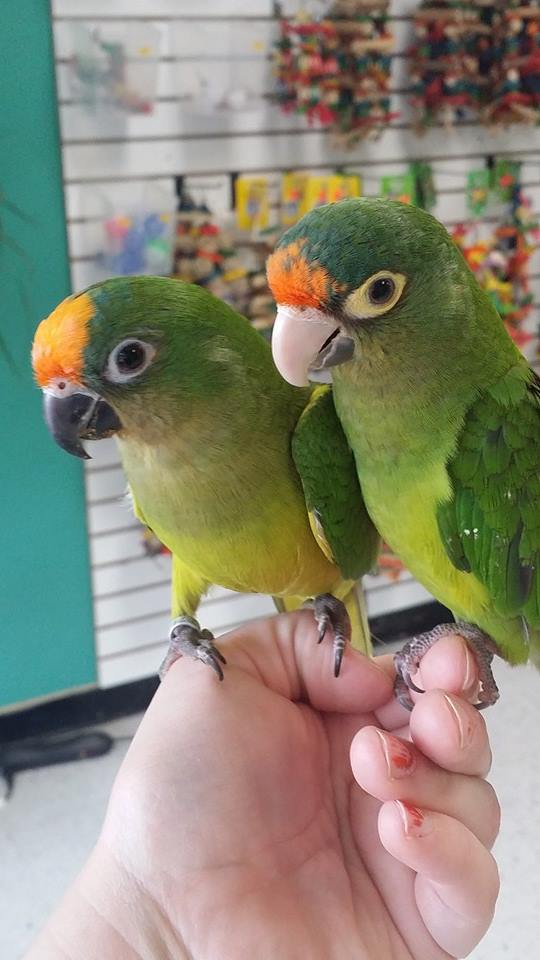
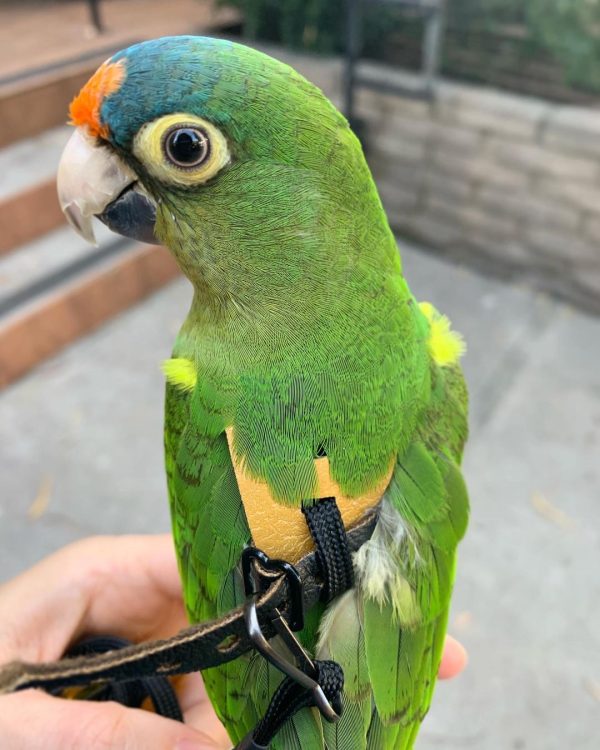
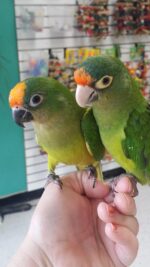
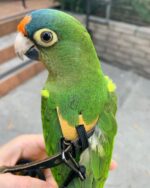
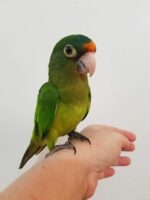
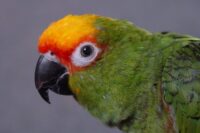
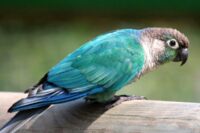
The “Half-moon” Crest: Their name comes from the bright, vibrant orange band just above their cere (nostrils), which looks like a crescent moon.
-
Deep Blue Crown: Just behind the orange “moon,” their crown is a beautiful, dusty sky-blue that blends into the forest green of their back.
-
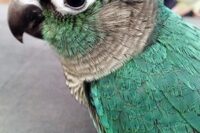
Large Pale Beak: They have a strikingly large, horn-colored (ivory) beak. Despite its size, they are generally very gentle with it.
-
Petite Stature: They are noticeably smaller than Sun or Jenday conures, making them feel more like a “miniature” parrot.
Quick Facts
| Feature | Details |
| Common Name | Half-moon Conure / Orange-fronted Parakeet |
| Scientific Name | Eupsittula canicularis |
| Average Size | 9 to 10 inches (23 to 25 cm) |
| Lifespan | 20 to 25 years with proper care |
| Temperament | Docile, curious, and affectionate |
| Noise Level | Low to Moderate (One of the quietest Aratinga-type birds) |
Care & Personality
The Half-moon is often recommended for first-time bird owners or apartment dwellers because of their manageable temperament:
-
The “Sweetheart” Reputation: They are less “feisty” than Green-cheeks and less “demanding” than Sun conures. They tend to be very steady and less prone to sudden mood swings.
-
The “Termite” Nester: In the wild, Half-moons have the fascinating habit of excavating their nests inside active termite mounds. This gives them a natural instinct to chew, so they must be provided with plenty of soft wood and balsa toys.
-
Soft Vocalizations: While they can give a shrill call if startled, their “talking” voice is often described as a soft, whispery mumble. They aren’t the best talkers, but they are great at mimicking whistles.
-
Social Bonding: They love to be part of the “flock” and will happily sit on a shoulder for hours. They aren’t as “velcro” as a Crimson-bellied, but they are very loyal to their favorite person.
Dietary Needs
Because they are small and active, they have high metabolic needs:
-
Fresh Fruit Preference: In the wild, they eat a lot of figs and blossoms. In captivity, they love juicy fruits like pomegranate, berries, and oranges.
-
Calcium Support: Like all small conures, ensuring they have access to calcium (via cuttlebone or mineral blocks) is vital, especially for females.
Is a Half-moon Conure Right for You?
The Half-moon is the “hidden gem” of the conure world. They are beautiful, relatively quiet, and have a sunny disposition that matches their orange forehead. If you are looking for a bird that is easy to handle and has a gentle soul, the Half-moon is an excellent choice.
Reviews
There are no reviews yet.