


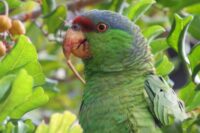
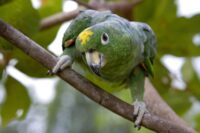
Manu Parrotlet
$449.95
| Feature | Details |
| Common Name | Manu Parrotlet / Amazonian Parrotlet |
| Scientific Name | Nannopsittaca dachilleae |
| Average Size | 4.7 to 5 inches (12 cm) |
| Weight | 38 to 46 grams (about the weight of a few coins) |
| Lifespan | 10 to 15 years (estimated in the wild) |
| Status | Least Concern / Near Threatened (Range-restricted) |
The Manu Parrotlet (Nannopsittaca dachilleae)
The Tiny Ghost of the Bamboo Forest
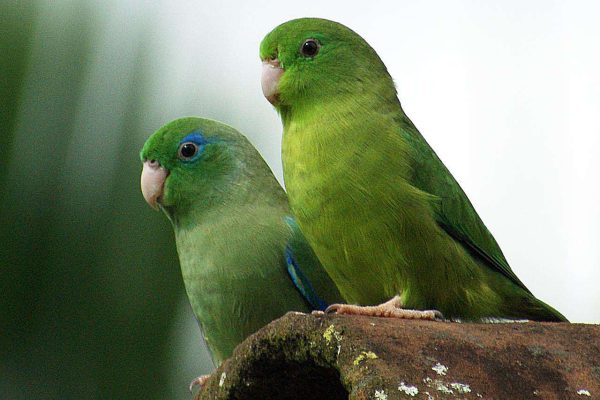
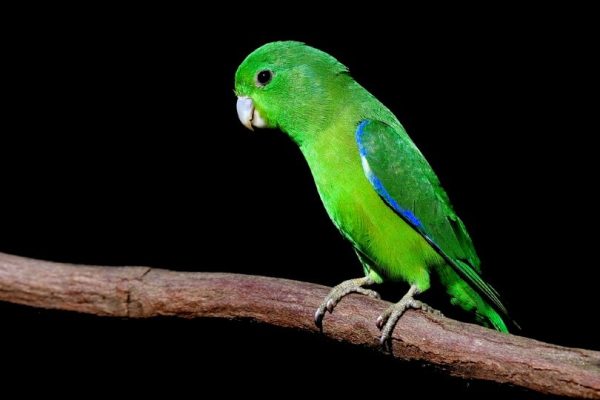
The Manu Parrotlet, also known as the Amazonian Parrotlet, is a fascinating and relatively recent discovery in the world of ornithology. First described in 1991, it is named after the Manu River in Peru and the late conservationist Barbara D’Achille. These “micro-parrots” are specialists of the Western Amazon, living in the dense, often inaccessible bamboo thickets and riverine forests of Peru, Bolivia, and Brazil.
Unlike the common Pacific Parrotlet, the Manu is almost never seen in captivity. It is a true wild spirit of the Amazonian lowlands.
Key Characteristics
-
Miniature Stature: One of the smallest parrots in the world, the Manu Parrotlet is only about 4.5 to 5 inches long. They are often described as having “big bird” personalities in bumblebee-sized bodies.
-
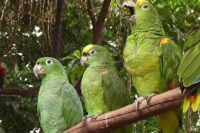
The Azure Forehead: Their most defining physical trait is a wash of pale, sky-blue feathers on the forehead and crown, which fades into the bright leaf-green of their body.
-
Bamboo Specialists: They are heavily associated with Guadua bamboo. They rely on these specific bamboo stalks for both food (seeds) and shelter, making them very sensitive to habitat changes.
-
Clay-Lick Visitors: They are frequently observed at “colpas” (clay licks) along riverbanks, where they congregate in small, social flocks of 5 to 12 birds to consume mineral-rich soil.
Quick Facts
| Feature | Details |
| Common Name | Manu Parrotlet / Amazonian Parrotlet |
| Scientific Name | Nannopsittaca dachilleae |
| Average Size | 4.7 to 5 inches (12 cm) |
| Weight | 38 to 46 grams (about the weight of a few coins) |
| Lifespan | 10 to 15 years (estimated in the wild) |
| Status | Least Concern / Near Threatened (Range-restricted) |
Behavior & Ecology
Because they are so small and live in dense foliage, the Manu Parrotlet is more often heard than seen:
-
The “Piping” Call: Their voice is distinct from other parrotlets—a series of high-pitched, rhythmic “piping” or “peeping” sounds that can resemble the chirping of domestic chicks.
-
Social Flocking: They are highly gregarious. They travel in tight-knit groups and are known to forage alongside other small parrot species, such as the Dusky-billed Parrotlet.
-
Dietary Niche: While they love bamboo seeds, they also feed on small fruits, Cecropia catkins, and the seeds of various forest vines.
The Mystery of the Manu
Because the Manu Parrotlet was only identified a few decades ago, much of its breeding biology remains a mystery. Only a handful of nests have ever been recorded—usually tucked away in clusters of epiphytes or bromeliads high in the canopy.
Related products

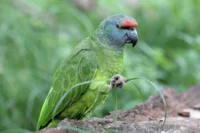
Amazona Bodini
| Feature | Details |
| Common Name | Bodin’s Amazon / Northern Festive Amazon |
| Scientific Name | Amazona festiva bodini |
| Average Size | 13 to 14 inches (1.08 to 1.16 feet) |
| Lifespan | 40 to 60+ years with proper care |
| Temperament | Intelligent, social, and observant |
| Speech Ability | Moderate; capable of mimicking speech and household sounds |

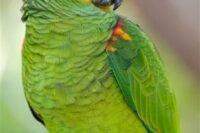
Blue Front Amazon
| Feature | Details |
| Common Name | Blue-fronted Amazon / Turquoise-fronted |
| Scientific Name | Amazona aestiva |
| Average Size | 14 to 15 inches (1.16 to 1.25 feet) |
| Lifespan | 50 to 70+ years with proper care |
| Temperament | Social, outgoing, and highly intelligent |
| Speech Ability | Excellent; one of the best in the parrot world |
Blue-Cheeked Amazon
| Feature | Details |
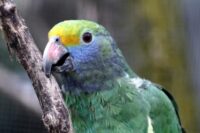
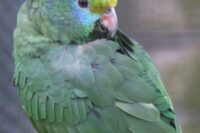
| Common Name | Blue-cheeked Amazon / Dufresne's Amazon |
| Scientific Name | Amazona dufresniana |
| Average Size | 13 to 14 inches (1.08 to 1.16 feet) |
| Lifespan | 40 to 60 years with proper care |
| Temperament | Gentle, intelligent, and relatively steady |
| Speech Ability | Moderate; capable of learning a few words and clear whistles |

Cuban Amazon
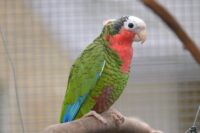
| Feature | Details |
| Common Name | Cuban Amazon / Rose-throated Parrot |
| Scientific Name | Amazona leucocephala |
| Average Size | 11 to 13 inches (0.92 to 1.08 feet) |
| Lifespan | 50 to 60+ years with proper care |
| Temperament | Intelligent, social, and bold (can be aggressive) |
| Speech Ability | Excellent; high-clarity mimics of speech and song |


Festive Amazon
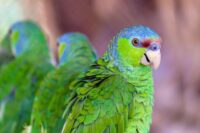
| Feature | Southern Festive (A. f. festiva) | Bodin's Amazon (A. f. bodini) |
| Primary Habitat | Amazon River Basin (Brazil, Peru, etc.) | Orinoco River Basin (Venezuela, Colombia) |
| Beak Color | Dark grey / Horn colored | Predominantly Black |
| Forehead Red | Narrow maroon band | Extensive red "mask" up to the crown |
| Cheeks | Yellowish-green | Suffused with violet-blue |


Reviews
There are no reviews yet.