

Black-Billed Amazon
$899.95
| Feature | Details |
| Common Name | Black-billed Amazon |
| Scientific Name | Amazona agilis |
| Average Size | 10 to 11 inches (0.83 to 0.92 feet) |
| Lifespan | 40 to 50+ years |
| Status | Endangered |
| Temperament | Observant, social (in flocks), and energetic |
The Black-billed Amazon (Amazona agilis)
The Subtle Treasure of Jamaica
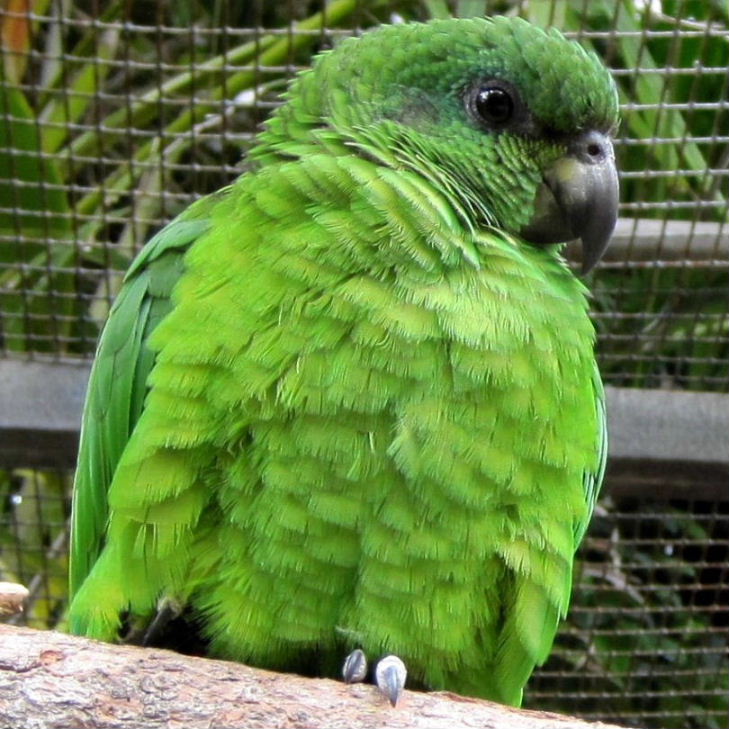
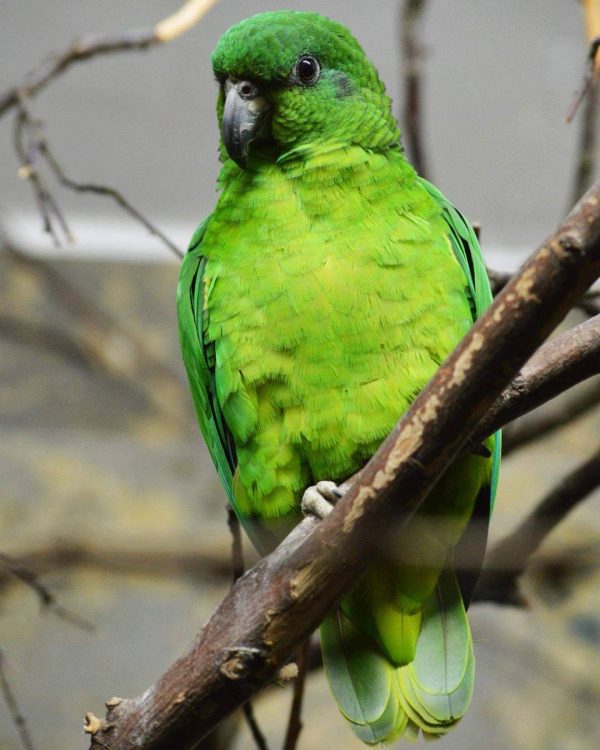
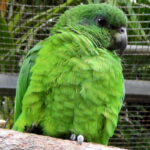
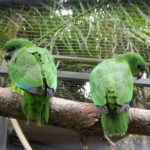
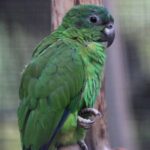
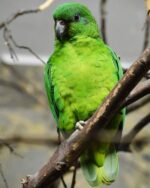
The Black-billed Amazon is one of the smallest and most understated members of the Amazon family. Endemic only to the island of Jamaica, it is a rare sight in the wild and even rarer in captivity. Unlike many of its colorful relatives, it possesses a quiet, camouflage-ready beauty designed for life in the limestone forests of the Blue Mountains and the Cockpit Country.
Key Characteristics
-
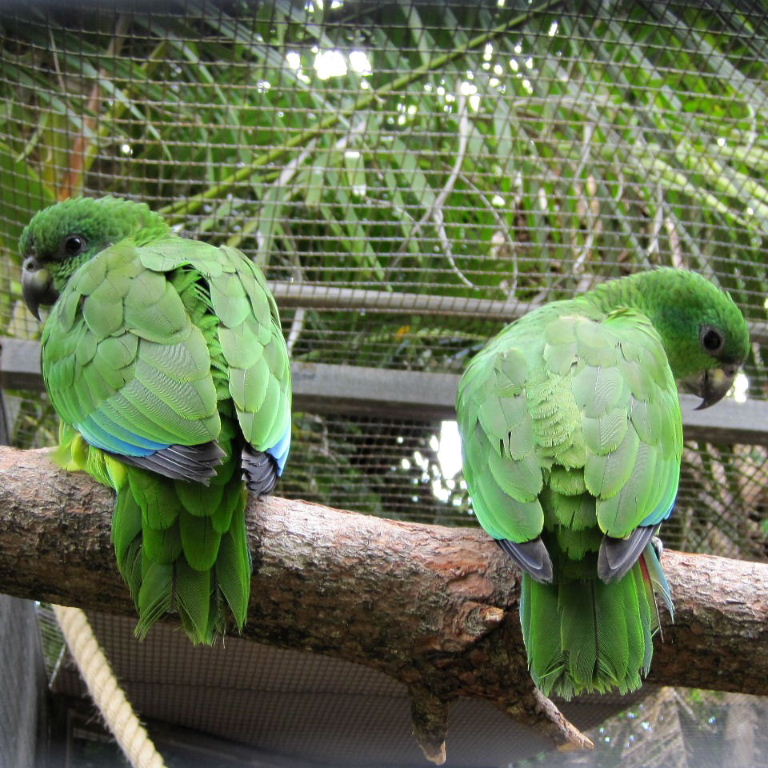
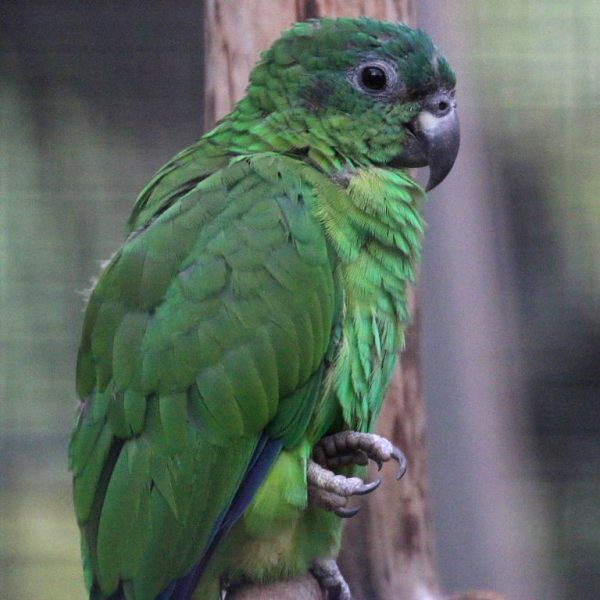
The Coal-Black Beak: True to its name, this species is easily distinguished from other Jamaican parrots by its dark, charcoal-grey to black bill.
-
Vibrant Wing Flashes: While the body is a soft, deep forest green, the primary wing feathers feature a stunning “hidden” splash of red and violet-blue that is mostly visible when the bird is in flight.
-
Compact and Agile: Being one of the smallest Amazons, they are incredibly maneuverable fliers, darting through thick canopy foliage with ease.
-
Quiet Intelligence: They are known for being more reserved than the larger, boisterous Amazons. They are observant and steady, often staying silent and still to blend into the leaves when they sense danger.
Quick Facts
| Feature | Details |
| Common Name | Black-billed Amazon |
| Scientific Name | Amazona agilis |
| Average Size | 10 to 11 inches (0.83 to 0.92 feet) |
| Lifespan | 40 to 50+ years |
| Status | Endangered |
| Temperament | Observant, social (in flocks), and energetic |
Care & Conservation Status
The Black-billed Amazon is a high-priority species for conservationists. Because they are endangered, they are rarely kept as pets and are primarily found in specialized breeding programs or their native habitat:
-
Habitat Preservation: Their survival is closely tied to the preservation of old-growth Jamaican rainforests. They rely on hollows in mature trees for nesting.
-
Dietary Needs: In the wild, they feed on a wide variety of native fruits, seeds, and blossoms. In a managed environment, they require a diverse, low-fat diet to prevent health issues common in smaller Amazons.
-
Social Flocks: They are highly social and are almost never seen alone. They travel in small family groups or larger flocks, communicating with soft, bubbling vocalizations.
A Symbol of Island Resilience
The Black-billed Amazon is a vital part of Jamaica’s natural heritage. Protecting this small, intelligent parrot is a major focus for local and international environmental groups working to ensure the biodiversity of the Caribbean.
Related products

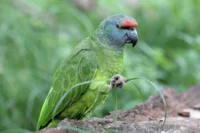
Amazona Bodini
| Feature | Details |
| Common Name | Bodin’s Amazon / Northern Festive Amazon |
| Scientific Name | Amazona festiva bodini |
| Average Size | 13 to 14 inches (1.08 to 1.16 feet) |
| Lifespan | 40 to 60+ years with proper care |
| Temperament | Intelligent, social, and observant |
| Speech Ability | Moderate; capable of mimicking speech and household sounds |
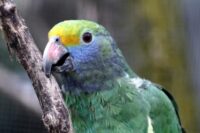
Blue-Cheeked Amazon
| Feature | Details |
| Common Name | Blue-cheeked Amazon / Dufresne's Amazon |
| Scientific Name | Amazona dufresniana |
| Average Size | 13 to 14 inches (1.08 to 1.16 feet) |
| Lifespan | 40 to 60 years with proper care |
| Temperament | Gentle, intelligent, and relatively steady |
| Speech Ability | Moderate; capable of learning a few words and clear whistles |
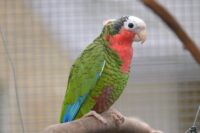
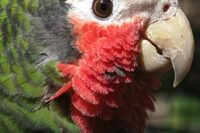
Cuban Amazon
| Feature | Details |
| Common Name | Cuban Amazon / Rose-throated Parrot |
| Scientific Name | Amazona leucocephala |
| Average Size | 11 to 13 inches (0.92 to 1.08 feet) |
| Lifespan | 50 to 60+ years with proper care |
| Temperament | Intelligent, social, and bold (can be aggressive) |
| Speech Ability | Excellent; high-clarity mimics of speech and song |

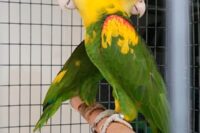


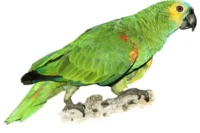
Festive Amazon
| Feature | Southern Festive (A. f. festiva) | Bodin's Amazon (A. f. bodini) |
| Primary Habitat | Amazon River Basin (Brazil, Peru, etc.) | Orinoco River Basin (Venezuela, Colombia) |
| Beak Color | Dark grey / Horn colored | Predominantly Black |
| Forehead Red | Narrow maroon band | Extensive red "mask" up to the crown |
| Cheeks | Yellowish-green | Suffused with violet-blue |
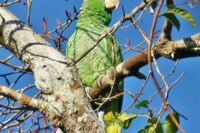
Kawalls Amazon
| Feature | Details |
| Common Name | Kawall’s Amazon / White-cheeked Amazon |
| Scientific Name | Amazona kawalli |
| Average Size | 14 to 15 inches (1.16 to 1.25 feet) |
| Lifespan | 40 to 60+ years (typical for large Amazons) |
| Status | Least Concern (but declining due to habitat loss) |
| Native Range | Central Amazon Basin, Brazil (Amazonas & Pará) |
Manu Parrotlet
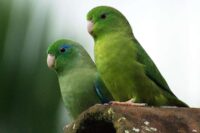
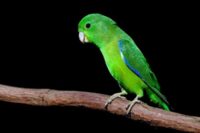
| Feature | Details |
| Common Name | Manu Parrotlet / Amazonian Parrotlet |
| Scientific Name | Nannopsittaca dachilleae |
| Average Size | 4.7 to 5 inches (12 cm) |
| Weight | 38 to 46 grams (about the weight of a few coins) |
| Lifespan | 10 to 15 years (estimated in the wild) |
| Status | Least Concern / Near Threatened (Range-restricted) |
Reviews
There are no reviews yet.